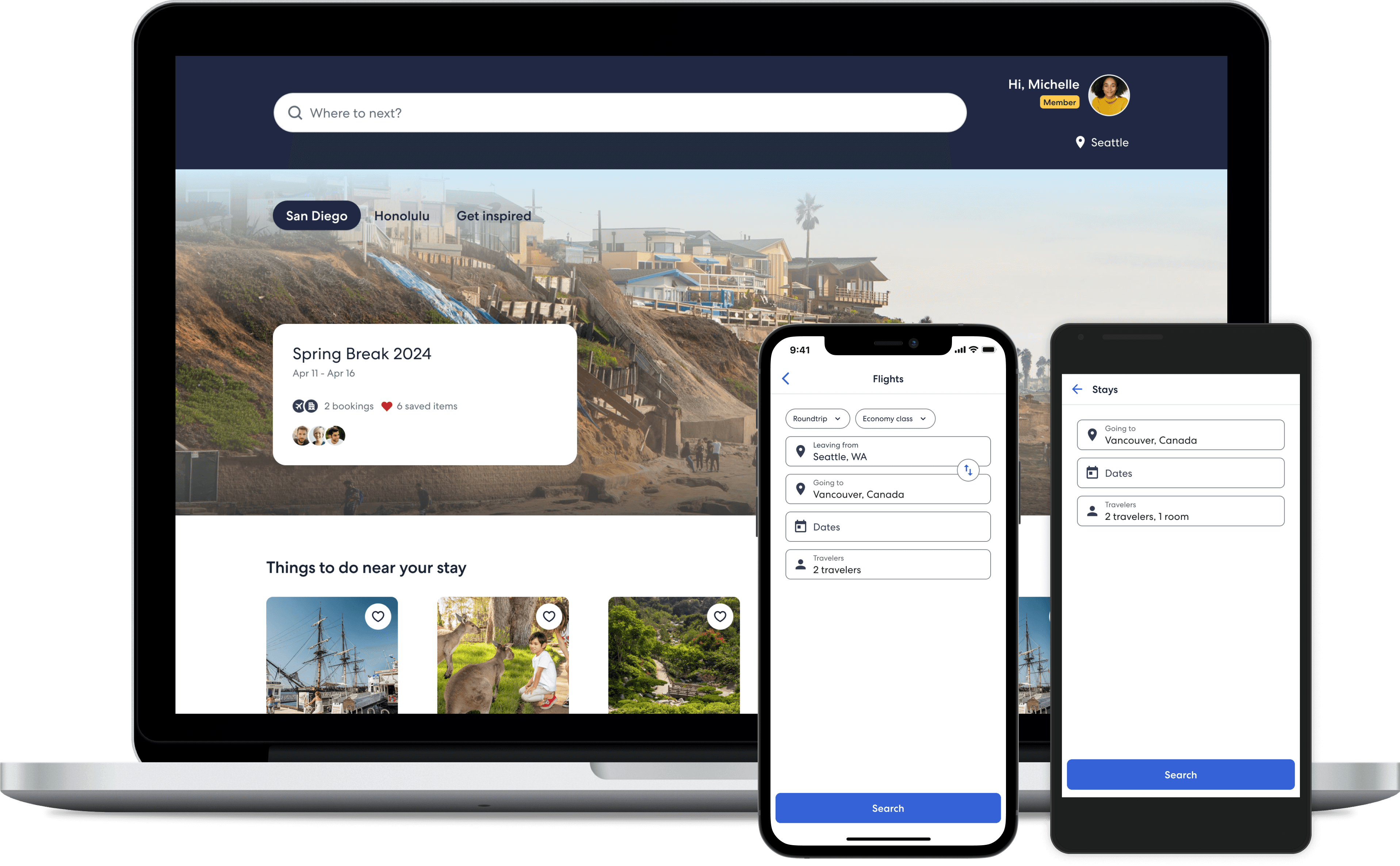
A cohesive search experience contributed to $20M GP
Navigating organizational complexity, I led the team to ship a cohesive search experience that eliminated cross-product inconsistencies, making it easier for users to book multiple items for their trip.
The cohesion increased conversion by +6% and empowered 10+ product teams to scale for their evolving needs, contributing to $20.09M in gross profit.

ROLE
COMPANY
Expedia
TYPE OF INITIATIVE
System-level
TEAM
2 Product Designers, 1 Product Manager, Software Engineers, 10+ cross-program stakeholders
RESPONSIBILITIES
Discovery, Product strategy & Design experience, Content
50+ search CX
Across 10+ teams
+6%
CVR
$20M+
GP

Planning multi-item trips can be frustrating
Expedia has 50+ search experiences across iOS, Android, and web that was once built independently amongst 10+ product teams (flights, lodgings, activities, and more), creating inconsistent experiences that made it frustrating for users to book multiple items for their trip.

This was more than just a UI problem but an organizational, system-level challenge since all the teams had competing goals, priorities, and existing ownership.
Goal: in search of cohesion
We realized we needed to form one team, dedicated to overseeing the foundation of a cohesive end-to-end search experience, while working with the various product teams to craft a scalable and extensible vision. We also decided to build using shared UI components powered by server-driven UI to design a shared foundation that’s scalable.
Involving the 10+ teams
Involving the 10+ teams early in the process, I led the alignment as a shared problem and to make sure their use cases shaped the foundation of the system. I audited Expedia’s existing search experience and looked at our competitors. The insights helped shape our search flow and search patterns.
What is the search flow?
Referencing the competitor audit, I identified three distinct search flow themes: progressive disclosure, hub & spoke, and on-page edit. Through a user research study, we learned that they are all viable option for our users. So taking the best aspects of the three flow patterns, I decided on a hybrid approach, serving as a foundation for our modular search ecosystem.
In order to build a cohesive end-to-end search experience that’s scalable and extensible, a modular approach is key as it is easy to create search content for different teams and to swap content over time to adapt to user needs and business changes.

What is the search pattern?
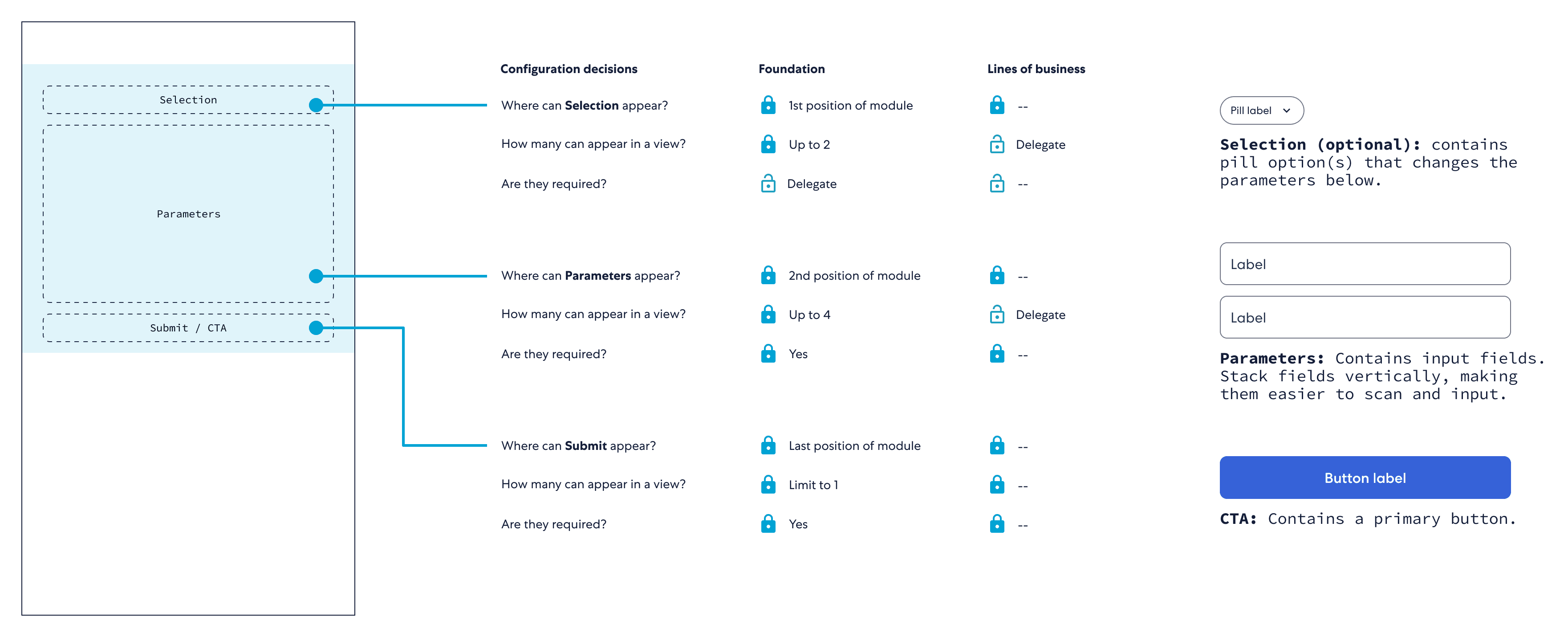
Putting this all together, I created a framework. The configuration framework defines the foundation of the system where things can appear, how many can appear, what's required, and the types of UI components that can be used together. That specificity is what makes the system self-governing, teams can extend it without breaking the cohesion because the rules define what flexibility is permitted.
Impact: $20M+ gross profit
We shipped the foundation of the modular search ecosystem. The cohesion improvement itself drove a 6% conversion increase, equating to $230k in annualized gross profit. The shared foundation enabled multiple product teams to build upon it to fit their needs while maintaining cohesion, bringing in an additional $20.09M in gross profit that year, and the framework is still being built on today. Users are having a much better time booking multiple items with us.